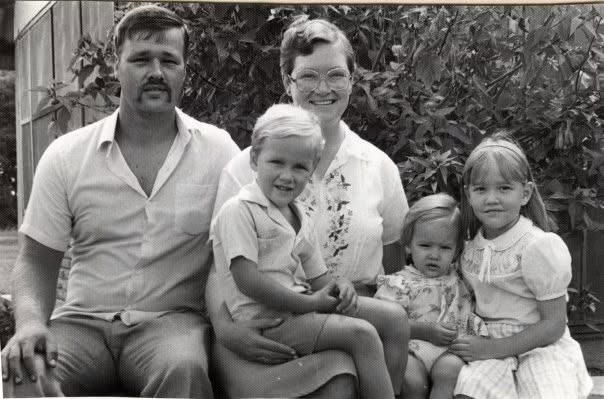
God’s Faithfulness Through the Years
When Angie and I look back on more than forty years of missionary service in Honduras, we can see how God used people, places, and opportunities to prepare us for ministry we could never have imagined. We often saw His guidance more clearly looking back than we did at the time.
These are some of the moments that helped us recognize His faithfulness. We hope that sharing them will encourage you to trust Him in whatever season you’re in.
Early Life and Spiritual Foundations
From Reluctance to Calling—The idea of becoming a missionary took time to grow on me. At first, I was reluctant. Over time, I became willing to consider it, and eventually I sensed God calling me to serve.
Looking back, I see three decisions that shaped that journey. I accepted Christ as my Savior, surrendered my life wholly to Him, and answered His call to missionary service. Now, as an emeritus missionary with World Gospel Mission, I’m learning what it means to abide in Christ in this season of life. For me, that means staying faithful and being at peace wherever He leads us.
Growing Up in Rural Ohio
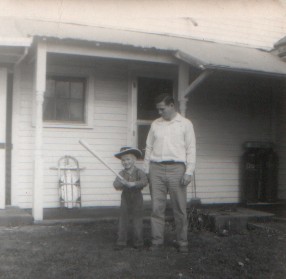
I was born on April 18, 1955, in Salisbury, Maryland, on the Eastern Shore. My family moved to Ohio when I was about two years old. I grew up in Waterford, a small rural community in Knox County near Fredericktown, where I went to school.
We had little money, and my parents worked hard to make sure we had what we needed. I remember Mom doing the laundry in the basement with an old Maytag wringer washer. She hung the clothes outside even in winter, and some days they froze stiff on the line.
Dad never attended high school, but he valued education and enjoyed learning. One of my fondest memories is seeing him reclining on the living room couch reading the Encyclopedia Britannica. He decided to read the entire set, from A to Z, and he did.
When an opportunity came for him to advance in his job at the Cooper-Bessemer factory in Mount Vernon, he brought home an algebra textbook and taught himself the mathematics he needed to qualify as a machinist. He often worked more than one job to support our family.
Some of my earliest work experiences came from accompanying Dad to help a local farmer, Tyrol Noble. Tyrol took an interest in me and even paid me my first hourly wage, although I’m sure I wasn’t worth much as a worker at that age! I remember Dad putting me on the seat of an old Allis-Chalmers tractor before I was big enough to reach the clutch or brake pedal. My job was to steer the tractor as it slowly pulled the hay wagon down the field while Dad and Tyrol loaded the bales from off the ground. When the wagon was full, Dad took over the tractor and drove it back to the hay mow.
Those experiences taught me about work, responsibility, and the value of people who are willing to invest their time in someone younger.
My father’s example also taught me that learning doesn’t end when formal schooling is over. Many years later, when I returned to graduate school and eventually completed my doctorate, I often thought about his determination to keep learning. I was older than most graduate students, but my academic advisor reminded me that I brought years of practical experience to my studies.
Reflections on Growing Up in Rural Ohio
My First Spiritual Decision: Accepting Christ
Church was a regular part of my childhood. Although Dad wasn’t particularly religious, he normally didn’t work on Sundays. Sunday was a day of rest, and my parents sent us to church. I attended the local Church of Christ, just a few hundred yards from our house. I went to Sunday school and worship services and learned the Bible stories and basic teachings of the Christian faith.
Like many children who grow up attending church, I assumed that made me a Christian. I hadn’t given much thought to the difference between attending church and personally committing my life to Christ. That changed when I was about twelve years old. During a week of revival services, a former pastor of our church approached me and asked, “Larry, don’t you think it’s time for you to accept Christ?” I don’t remember everything that was said that day, but I remember our former minister’s question. It caused me to think seriously about my relationship with God. I realized that attending church wasn’t the same as personally trusting Christ as my Savior.
I made that decision, and a few days later I was baptized in a creek near our church. The water was so cold that I thought I would freeze! But I also remember the peace and assurance I experienced afterward.
That was the first of several important spiritual decisions that would eventually shape the direction of my life. I didn’t know where God would lead me, but I had taken my first personal step of faith.
A Missionary? Not Me!
Growing up in rural Ohio, I had little interest in becoming a missionary. In fact, I remember sitting on our front porch one day and declaring that I would never be a missionary.
I don’t remember exactly what prompted that statement, but I was quite certain about it.
I enjoyed agriculture, working outdoors, and rural life. I had my own ideas about the future, and missionary service wasn’t part of them.
Looking back, I find it interesting how confidently I ruled out something that would eventually become such an important part of my life. At the time, however, I had no idea how much my thinking would change.
“I remember sitting on our front porch one day and declaring that I would never be a missionary.”
Meeting Angie: A New Direction
In 1969, a new United Methodist pastor and his family moved into our community. His daughter, Angie Hash, and I were both fourteen years old when we met. For me, it was love at first sight.
I soon began attending the Methodist youth group, partly because it gave me more opportunities to spend time with Angie. Her parents were understandably protective, and spending time together often meant having her younger brother, Rick, along as a chaperone.
Meeting Angie was the beginning of much more than a relationship. Looking back, I believe it was an important part of God’s plan for both of our lives. Although I had accepted Christ a couple of years earlier, I was still learning what it meant to follow Him. Through our relationship, our families, our involvement in the church, and the experiences we shared, we both continued to grow spiritually.
We didn’t understand at the time how God was bringing these things together or where He would eventually lead us. We were simply two young people growing up in rural Ohio, getting to know each other and beginning to think about our future.
As our relationship developed, we began talking about the possibility of serving God together as missionaries. That was quite a change for someone who had previously declared that he would never become one!
It would take several more years and some important spiritual decisions before that possibility became a commitment.
Today, after more than forty years of serving together in Honduras, we can see how God was at work in our lives long before we understood His plans for us. Meeting Angie was one of the ways He began preparing us for the life and ministry we would eventually share.
Education and Early Influences
I graduated from Fredericktown High School in 1973, where Angie and I were part of the first freshman class in the “new” building. I gravitated toward vocational agriculture, enjoying hands-on work and applying what I learned.
Though I’ve forgotten more from high school than I remember, I am deeply grateful for the knowledge foundation I received there. I’ll be honest: I never made it onto the academic Honor Roll back then. But what I received was more important than grades.
I don’t remember much from the “Periodic Chart,” but Mrs. Boone, my Chemistry teacher taught me how to balance equations, convert measures, and solve problems. She gave me a final “C” in Chemistry and remarked, “At least you’ve been consistent.” That consistency became the bedrock of my life’s work. Mrs. Stout opened my eyes to literature’s power, while Mr. Krocker encouraged me to use my gifts in service after I ran as the Independent candidate in the ’72 mock election. Mrs. Degler, my typing teacher, even bought me a typewriter at auction so I could practice at home, setting the stage for my later writing and teaching.
Our Fredericktown educational foundation guided Angie and me as we spent our lives investing in education for others in southern Honduras—from vocational training to 4-H programs to establishing the first high school nursing program in Honduras in partnership with The Ohio State University.
Growing up in a rural community, I enjoyed agriculture and working with my hands. I was interested in farming and putting what I learned into practice.
Taking typing in high school proved more valuable than I anticipated. That skill enabled me to efficiently prepare reports, teaching materials, correspondence, research papers, a dissertation, and even our recent book—something I never imagined when I first sat at a typewriter.
Looking back, I can see how many of these early experiences helped prepare me for the work we would eventually do in Honduras. My interest in agriculture, my parents’ example, the importance of education, and our local church all contributed to the person I was becoming.
At the time, I wasn’t thinking about preparing for a lifetime of missionary service. I was simply growing up in rural Ohio, learning to work, developing my faith, and beginning a relationship with the young woman who would become my wife and partner in ministry.
God was already at work in our lives, even though we had little idea where He would lead us.
Church was a regular part of my childhood. Although Dad wasn’t particularly religious, he normally didn’t work on Sundays. Sunday was a day of rest, and my parents sent us to church.
As I look back on those early years, I am reminded that God’s work in our lives often begins long before we recognize it. I attended the local Church of Christ, just a few hundred yards from our house. I went to Sunday school and worship services and learned the Bible stories and basic teachings of the Christian faith.
Like many children who grow up attending church, I assumed that made me a Christian. I hadn’t given much thought to the difference between attending church and personally committing my life to Christ.
That changed when I was about twelve years old.
During a week of revival services, a former pastor of our church approached me and asked, “Larry, don’t you think it’s time for you to accept Christ?”
I don’t remember everything that was said that day, but I remember his question. It caused me to think seriously about my relationship with God. I realized that attending church wasn’t the same as personally trusting Christ as my Savior.
I made that decision, and a few days later I was baptized in a creek near our church. The water was so cold that I thought I would freeze! But I also remember the peace and assurance I experienced afterward.
That was the first of several important spiritual decisions that would eventually shape the direction of my life. The next important step would be learning what it meant to surrender my life completely to Him.
I graduated from Fredericktown High School in 1973. I enjoyed vocational agriculture, working with my hands, and putting what I learned into practice.
I also took typing in high school, a skill that proved far more useful than I ever expected. Years later, I would spend countless hours preparing reports, teaching materials, correspondence, and research papers. I certainly didn’t anticipate that when I first sat down at a typewriter.
Looking back, I can see how my childhood experiences helped prepare me for the work Angie and I would eventually do in Honduras. My parents taught me the value of hard work and education. Tyrol Noble gave me opportunities to learn by doing. Our churches provided a foundation for my faith. And meeting Angie began a relationship that would shape the rest of my life.
None of these experiences seemed particularly unusual at the time. They were simply part of growing up.
I still had much to learn about following Christ. Although I had accepted Him as my Savior, I had not yet come to the point of surrendering my plans for the future to Him.
That would be the next important step in my spiritual journey.
I recognize how our childhood experiences helped prepare Angie and me for the work we would eventually do in Honduras. My parents taught me the value of hard work and education. Tyrol Noble gave me opportunities to learn by doing. Our churches provided a foundation for our faith. Meeting Angie began a relationship that would shape the rest of my life. None of these experiences seemed particularly unusual at the time. They were simply part of growing up. I still had much to learn about following Christ. Although I had accepted Him as my Savior, I had not yet come to the point of surrendering my plans for the future to Him. That would be the next important step in my spiritual journey.
God’s Call and Preparation
One aspect of our story has become clearer over time: God was at work in both our lives long before we recognized His hand or understood His purposes.
In our early teen years, both Angie and I independently sensed God’s call to missionary service. We had no idea how God would bring our lives together, or where that call would lead, but we each felt invited to place our futures in His hands.
For me, this marked the second major spiritual decision of my life. Having accepted Christ as my Savior as a young boy, I now faced a deeper question: would I surrender my plans and ambitions completely to Him—not just where I would serve, but who would direct my life?
During those years, God gradually taught me that discipleship is more than believing in Christ; it means yielding our plans, preferences, and future to His leadership.
Looking back, I can see God’s preparation in many ordinary experiences: family, church, education, work, mentors, friendships, and the relationship He was building between Angie and me. What once seemed like unrelated events were pieces of a larger story only God could see.
Independently, God called us in our early teen years to serve as missionaries.
Growing up in a pastor’s home, Angie accepted the Lord at age twelve and loved listening to visiting missionaries share their stories. Serving alongside her father—playing piano in church, cleaning the church building, and serving as a visiting chaplain at the local hospital—nurtured her heart for service and planted the seeds of her call to missions.
For me, the turning point came at age fourteen, when Angie and I attended a camp meeting. After the evangelist’s call to surrender everything to God, I felt a clear conviction to lay down my own plans and say “yes” to whatever God asked of me—including missionary service. I initially thought this meant preaching and teaching, but soon realized God had different ways to use the skills and passions He had given us.
Our paths merged as we dated in high school. Angie’s father had always told her she would spend at least two years at Asbury College (now Asbury University) to gain a strong biblical foundation. That was reason enough for me to attend Asbury as well. Together, God prepared us academically and practically for cross-cultural service. I attended Asbury College in Kentucky and then earned a Bachelor of Science in Agriculture from The Ohio State University—later completing a Master of Ministry from Mount Vernon Nazarene College, a Master of Science in Human and Community Resource Development from The Ohio State University, and eventually my doctorate (Ph.D. in Human and Community Resource Development from The Ohio State University in 2003). Meanwhile, Angie pursued nursing, earning her Associate of Science in Nursing from Otterbein College and later completing both a Bachelor of Science in Nursing and a Master of Science in Nursing at The Ohio State University, becoming a certified family nurse practitioner (FNP-BC).
Beginning Missionary Service
Our missionary service began with a summer trip to Honduras in 1975. Our missionary service began with a summer trip to Honduras in 1975 under World Gospel Mission (WGM).
That first summer experience opened our eyes to the realities of cross-cultural ministry, the needs of rural communities, and the joy of serving alongside Honduran believers. Over the next several years, as we completed our education, started our family, and partnered with supporting churches and friends, God confirmed our calling. We applied for full-time appointment with WGM in late 1979, were approved as career missionaries, and officially stepped onto the field full-time in 1980.
Ministry in Honduras
We served with World Gospel Mission from 1980 to 2023.
Arrival in Honduras & Language Acquisition
Stepping onto the mission field as career missionaries in 1982 after two years of fund raising meant learning to navigate a new culture, build trust, and communicate in Spanish. Acquiring the language was foundational—not simply to translate words, but to listen well, share the gospel clearly, and walk alongside Honduran pastors, students, and neighbors as true partners.
Early Ministry Assignments
Our first twenty years in Honduras were centered at Escuela El Sembrador in Catacamas, Olancho. Here, my background in rural Ohio agriculture and Angie’s training in nursing came together in practical, everyday service. While raising our three children—L. Allen II, Nicole, and Nathaniel—on the field, we invested in students’ lives through education, hands-on agricultural training, health care, and spiritual mentorship.
Educational Development Initiatives
Education remained a cornerstone throughout our forty-three years of ministry. At El Sembrador, we helped equip young people with both practical skills and a biblical worldview. Later, in southern Honduras, this commitment expanded through health promotion in local schools—reaching over a thousand youth weekly—and through the development of vocational training and the IETI nursing high school program, preparing young people for meaningful service and employment.
Community Development Projects
Following the devastation of Hurricane Mitch in October 1998, God opened a new chapter of ministry in southern Honduras. In 1999, after praying and visiting Choluteca at the invitation of the Honduras Field Director Tom Dunbar, we sensed God’s clear peace to join the Honduran church in Choluteca starting in 2000. Working alongside national pastors and church leaders, our regional ministry team pursued wholistic community transformation—integrating church planting and discipleship with economic development (such as small business micro-loans and agrarian projects), education, and health care. Seeing communities go through the rebuilding process taught us that true restoration requires far more than physical structures; it requires strengthening spiritual foundations, building local leadership, and developing community relationships.
Family of Capitals
Leadership Training Efforts
From the beginning, our goal was never to build ministries dependent on missionaries, but to equip Honduran believers to lead. Through Theological Education by Extension (TEE), Sunday School teaching, discipleship groups, and mentoring local directors and health promoters, we watched national leaders step forward to launch Bible studies in surrounding villages, lead schools, and pastor growing congregations.
Significant Partnerships
None of this work happened in isolation. God wove together a vital network of Honduran churches (including the Holiness Church of Honduras, Iglesia Santidad de Honduras) and pastors, World Gospel Mission colleagues, stateside supporting congregations, work teams, and university study-abroad partnerships (including students and faculty from The Ohio State University) that mutually blessed both Honduran communities and visiting teams.
Section 5: Leadership Development and Community Transformation
Our early years at the Escuela El Sembrador were our missionary “internship”. Those first two decades at El Sembrador shaped our philosophy of ministry. Living and working in a rural school community taught us that lasting transformation happens when spiritual formation, practical skill-building, and local ownership work together. When we transitioned to Choluteca after Hurricane Mitch, those lessons proved vital. Rather than offering temporary relief alone, we partnered with local leaders to help individuals discover their God-given dignity, build sustainable livelihoods, and strengthen their local churches—helping grow a regional movement that established multiple congregations and community outreach initiatives across southern Honduras.
Section 6: Partnerships and Friendships Along the Journey
We celebrate the involvement of individuals, churches, organizations, and friends God placed alongside us. Many mentors helped us along the way. From Tyrol Noble on a farm in Knox County, Ohio, to local pastors, professors, WGM field directors, and prayer partners across the United States, God continually surrounded us with wise mentors and faithful supporters. Just as importantly, our Honduran coworkers, pastors, teachers, and neighbors became lifelong friends and spiritual family who taught us resilience, hospitality, and joy in every season.
Section 7: Lessons Learned Through Ministry
God taught us many key insights through both challenges and opportunities. Every day was a new experience. Over more than four decades in Honduras, every day brought unexpected challenges and fresh evidence of God’s grace. We learned that:
- God uses ordinary backgrounds—farm chores, high school typing, nursing shifts, and practical problem-solving—in ways we could never plan on our own.
- True community development must address the whole person: physical rebuilding alone cannot thrive without spiritual renewal, integrity, and healthy relationships.
- Patience and abiding in Christ matter far more than rushing for quick results; God’s timing is always purposeful, even during seasons of transition or uncertainty.
Family, Heritage, and Legacy
We recognize the importance of preserving spiritual heritage and passing God’s faithfulness to future generations. God has given us a rich heritage.
Raising our three children in Honduras and welcoming grandchildren into our family has been one of God’s greatest blessings. Just as our parents and grandparents modeled hard work, reverence for the Lord’s Day, and faithful church involvement, we have prayed that our family—and our spiritual children across Honduras—would carry forward a legacy of wholehearted devotion to Christ.
Recognition and Milestones
We have had several significant moments that mark God’s work and faithfulness through the years. God has blessed us in our career journey.
Major Ministry Transitions
| Year / Milestone | Description & Significance |
| 1975 | First summer mission trip to Honduras with World Gospel Mission. |
| 1980 | Full-time career appointment with WGM; arrival in Honduras. |
| 1980–2000 | Twenty years of foundational ministry at Escuela El Sembrador (Olancho). |
| 1999–2000 | Strategic transition following Hurricane Mitch to southern Honduras (Choluteca) for post-disaster rehabilitation and holistic ministry. |
| 2003 | Completion of Ph.D. at The Ohio State University, focusing mid-career research on community development and education. |
| 2017 | Recognition for decades of educational and healthcare leadership in southern Honduras. |
| 2023 | Concluding forty-three years of active field service with World Gospel Mission; entering Emeritus Status. |
People often ask why we dedicated our lives to missionary work in Honduras. The answer is in our book’s title: I Just Want to Be Somebody. Those were the words of a young man who had traveled 2,000 miles from Honduras to the U.S. border. He wasn’t looking for a handout; he was seeking the dignity of opportunity. Angie and I believed that loving our neighbor meant helping them find the tools to “be somebody” right in their own communities.
Hall of Honor Recognition
In 2023, after forty-three years of missionary service in Honduras, we transitioned to Emeritus status with World Gospel Mission and returned home to Mount Vernon, Ohio. This fourth spiritual decision—embracing retirement as a new assignment rather than the end of service—has allowed us to remain rooted in our local church community at Cornerstone Community Church in Fredericktown while continuing to serve God’s Kingdom.
Retirement/Emeritus Status
Continuing Kingdom Influence
God continues to use our past experiences and resources to encourage others today. George Whitefield is quoted as having said, “I would rather wear out than rust out.” While one season of ministry may close, God’s work continues. Through writing, teaching, mentoring, preserving legacy, and sharing resources, new opportunities remain to encourage others to follow Christ and extend His Kingdom influence.
Today in Mount Vernon and Fredericktown, Ohio, that mission continues in new forms—leading weekly small groups and Bible studies, teaching adult Christian education courses (such as integrating biblical stewardship with practical gardening), and writing to preserve lessons from post-disaster restoration and biblical community development so future leaders can build resilient, Christ-centered communities.
Looking Ahead
This timeline is not merely a record of the past. It testifies to God’s faithfulness and reminds us that the same God who guided yesterday continues to lead today and tomorrow. “Great is Thy faithfulness.” (Lamentations 3:23)