Our Journey in Honduras
When God called us to Honduras in 1980, we could not have imagined the journey that lay ahead. What began as a willingness to serve became four decades of learning, growing, and walking alongside Honduran families, churches, and communities.
Looking back, we see God’s faithfulness woven throughout the journey—in unexpected opportunities, difficult circumstances, enduring friendships, and the lives of people whose faith and perseverance profoundly influenced our own. From agricultural education at Escuela El Sembrador to rebuilding communities after Hurricane Mitch, and later to healthcare, education, and youth development in Choluteca, each chapter revealed new ways God was working.
This is not simply the story of where God led us. It is a testimony to what He accomplished through ordinary people working together in faith, and to the ways His mission continues through Honduran Christian leaders today.
1980–1998 | The Early Years: Learning to Serve
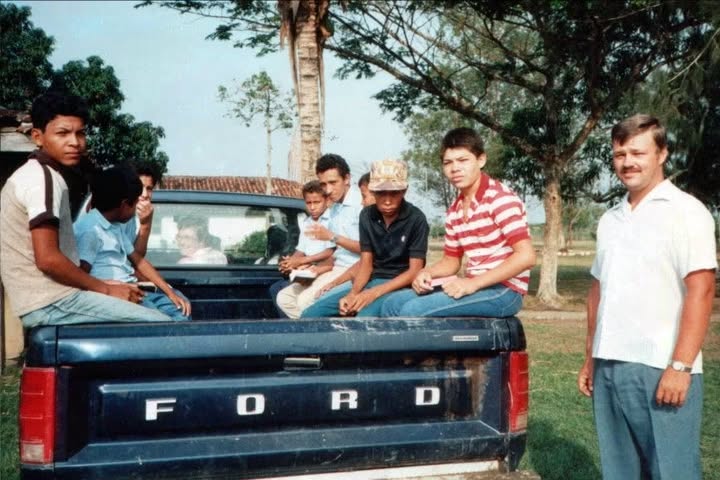
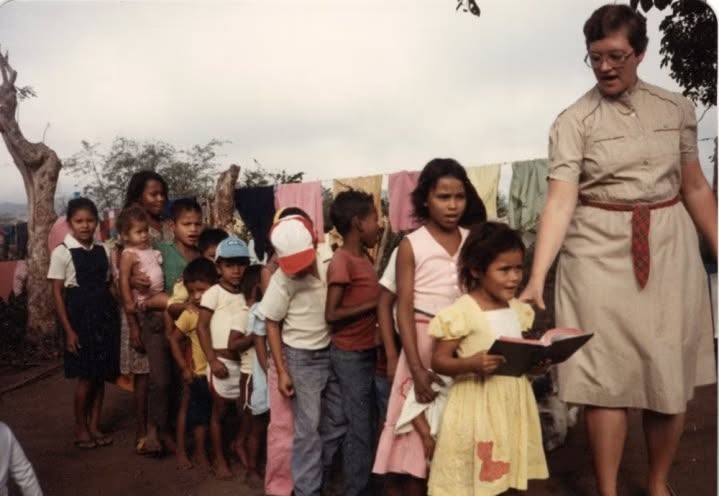
When Angie and I arrived in Honduras in 1980, we began our missionary service at Escuela El Sembrador, near Catacamas, Olancho. We came willing to serve, but we soon discovered how much we had to learn.
For the next eighteen years, El Sembrador became much more than a place of ministry. It became a place where God shaped our understanding of faith, relationships, and service. Working alongside Honduran students, teachers, staff, and fellow missionaries, we learned that meaningful ministry involves more than meeting immediate needs. It also means helping people discover their abilities, develop confidence, and prepare for opportunities beyond their present circumstances.
Much of my work centered on agricultural production, providing food for the school’s dining hall while generating income by selling agricultural products. Yet the greatest value of that work was not measured only in crops harvested or income earned. It was found in the relationships formed, the practical skills developed, and the opportunities to encourage young people as they prepared for their futures.
Looking back, we recognize that God was preparing us for challenges we could not yet imagine. The lessons we learned about working together, developing local abilities, and investing in people would become especially important when Hurricane Mitch devastated Honduras in 1998, and our journey eventually led us to Choluteca.
1998–2000 | Hurricane Mitch: When Everything Changed
In October 1998, Hurricane Mitch devastated Honduras, leaving widespread destruction, displacement, and uncertainty. Communities lost homes, livelihoods, roads, and essential services. For countless Honduran families, life would never be quite the same.
After eighteen years at Escuela El Sembrador, Angie and I found ourselves approaching an unexpected turning point in our missionary journey. The years we had spent working alongside Honduran students, teachers, and community leaders had taught us that meaningful development begins with people and relationships. Hurricane Mitch brought those lessons into sharper focus.
As we witnessed the enormous challenges facing Honduran communities, we began to recognize that rebuilding would require much more than replacing damaged buildings. It would involve restoring hope, strengthening relationships, developing local leadership, and helping families and communities discover the resources and abilities God had already placed among them.
We could not have anticipated where this journey would lead. Yet, looking back, we recognize God’s faithfulness in preparing us for a new chapter of ministry in southern Honduras.
2000 | A New Beginning in Choluteca
As Angie and I prepared to leave Escuela El Sembrador in 1998 for a two-year period of home ministry and study in Ohio, we knew that a change in our missionary assignment might be ahead. What we did not know was where God would lead us next. We certainly had no idea that when we returned to Honduras, our new home would be Choluteca.
In May 1998, just months before Hurricane Mitch devastated Honduras, we visited Choluteca. We went to see a friend and former student from El Sembrador who was working as a machinist in a local factory. He had graduated from the school’s machine trades vocational program and also worked with me in the garden in the evenings to earn extra money.
Our first impression of the city was hardly encouraging. May is among the hottest and driest months of the year in southern Honduras. The landscape was dry, the heat was oppressive, and the traffic seemed chaotic.
When we returned home, someone asked Angie whether Choluteca was pretty.
“No,” she replied. “It is the ugliest place I have ever seen.”
We have laughed about that response many times since. At the time, we saw Choluteca primarily through the eyes of visitors experiencing its heat, dust, and congestion. We had not yet come to know the people whose friendships would eventually transform our understanding of the city.
Only a few months later, Hurricane Mitch brought unimaginable devastation to Honduras. While we were in Ohio, the country we had come to love faced an enormous challenge of recovery and reconstruction.
When we returned to Honduras in 2000, we did not return to resume our former responsibilities at El Sembrador. Instead, God led us to Choluteca, a place we had visited without the slightest expectation of ever living there.
Looking back, we recognize that God had been preparing us through relationships, experiences, and circumstances we did not fully understand then. What initially seemed like an unlikely destination became the setting for a new chapter of ministry, friendship, and community reconstruction.
We discovered that Choluteca’s beauty lay not primarily in its landscape or buildings, but in its people.
2000–2010 | Rebuilding Communities, Strengthening Relationships
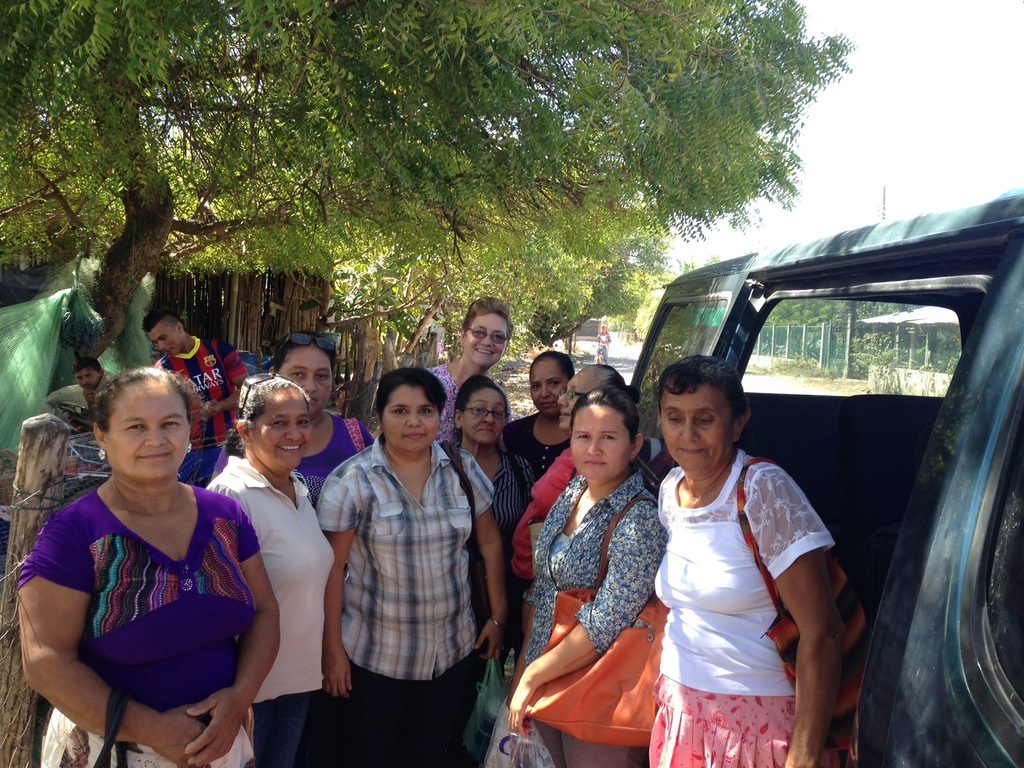
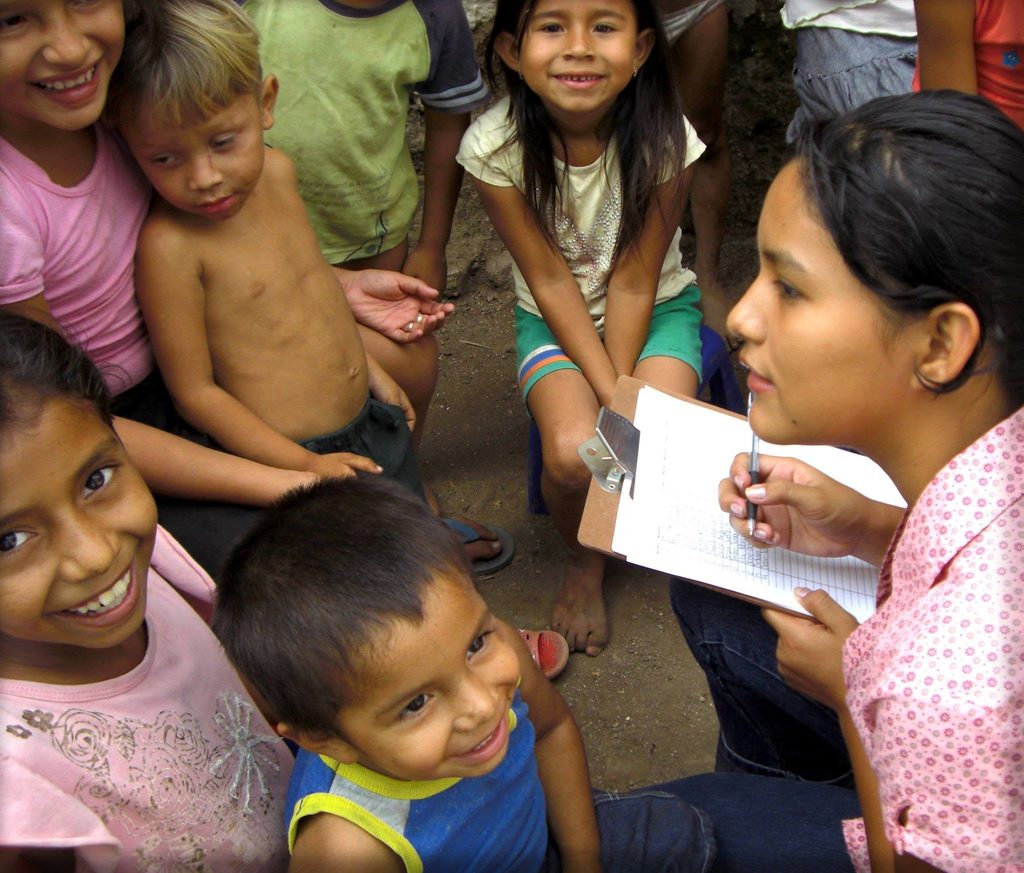
One of the most significant developments during these years was forming a team of Community Health Educators, initially drawn entirely from members of the local church. These believers were equipped and encouraged to serve families facing health-related and other everyday challenges. Their ministry became a practical expression of Christian faith and compassion beyond the church walls.
As the ministry expanded into neighborhoods and rural communities surrounding Choluteca, the team began incorporating extension workers from these new areas. This broadened participation and helped develop local leadership within the communities themselves. Rather than depending exclusively on the original church-based team, the ministry increasingly involved people who lived among the families being served and understood their circumstances firsthand.
These Community Health Educators and extension workers carried out most of the day-to-day ministry. Angie and I had the privilege of helping prepare, encourage, and support them, but they developed relationships, visited families, shared practical knowledge, and responded to community needs. Their commitment demonstrated that meaningful community development grows when local people are equipped and empowered to serve their neighbors.
Partnerships That Strengthened the Ministry
Our ministry in Choluteca was strengthened by the encouragement, expertise, and continuing involvement of our academic advisors at The Ohio State University. Their influence extended far beyond our university studies and became an important part of the educational and community health ministries that developed in southern Honduras.
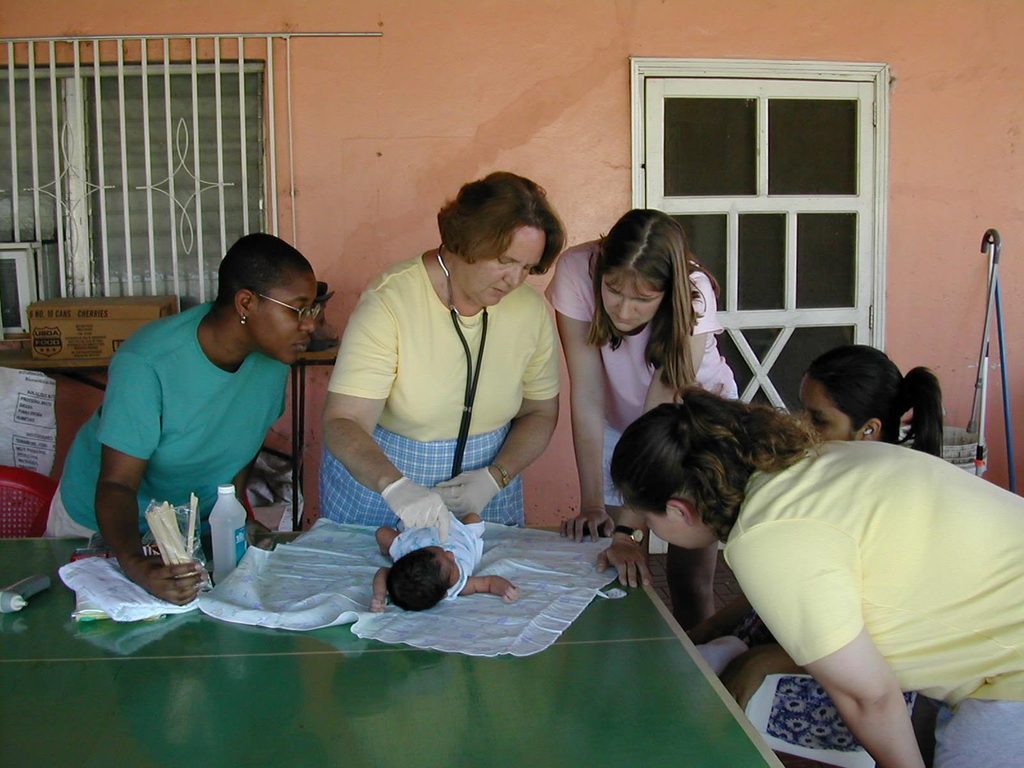
Angie’s nursing education helped establish a remarkable partnership with Ohio State. Beginning while she was a student, her nursing advisors helped lead medical and nursing brigades to Choluteca. These visits continued for more than twenty years, at one point involving as many as forty Ohio State participants on an annual trip. Faculty members, students, and healthcare professionals shared their knowledge and skills while gaining firsthand experience of the challenges facing Honduran families.
My academic advisor, Dr. Cano, also had a lasting influence on our approach to community development. He helped me understand the importance of Community Health Education and the value of preparing local people to become educators and leaders within their own communities. His interest was deeply personal: his mother had served as a health promoter in the southwestern United States. He understood that community health initiatives could be most effective when they equipped people to serve their own neighbors.
These academic relationships reinforced an important lesson we were learning through our work with Honduran churches and communities. Outside partnerships can provide valuable education, technical expertise, encouragement, and resources, but lasting community development depends upon the participation and leadership of local people.
Looking back, we are grateful for the many individuals God brought together through these partnerships. What began as relationships connected to our university education became opportunities for collaboration, mutual learning, and service that extended across many years.
2010–2020 | Investing in People, Preparing for the Future
During our first decade in Choluteca, much of our ministry developed through personal relationships, local churches, community visits, and the work of Community Health Educators. These experiences taught us the importance of listening to people, understanding their circumstances, and recognizing the abilities and resources already present within their communities.
As the ministry matured, we began to recognize the need for a more structured approach to education and leadership development. Although informal learning and personal relationships remained essential, we increasingly saw the value of non-formal and formal educational programs that could provide consistent instruction, develop practical skills, and create opportunities for long-term personal and community development.
This represented an important transition in our understanding of ministry. Rather than focusing primarily on responding to immediate needs, we wanted to strengthen individuals’ and communities’ ability to address challenges and pursue opportunities.
During these years, educational initiatives became an increasingly important part of our work in Choluteca. Programs in nursing education, vocational training, youth development, and community education reflected a shared commitment to helping people develop their God-given abilities.
Honduran educators and community members led these efforts, local churches participated, and partnerships with individuals and organizations shared a commitment to education and service.
Looking back, we recognize that the relationships developed during our earlier years in Choluteca provided an essential foundation for this new chapter. The methods evolved, but the underlying purpose remained the same: to participate in God’s transforming work by encouraging people, strengthening communities, and creating opportunities for individuals to become all that God intended them to be.
Vocational Education | An Unexpected Door Opens
One of the earliest priorities expressed by members of the young church in Choluteca was vocational education. They were concerned about young people who were neither studying nor working, commonly referred to as ninis. Without opportunities to develop practical skills or find meaningful employment, many faced an uncertain future.
Although we recognized the need, Angie and I were hesitant to undertake such an ambitious project. Establishing a vocational school would require facilities, equipment, qualified instructors, and financial resources that seemed far beyond our capacity.
The church members, however, kept encouraging us. They suggested beginning with something manageable: a small sewing class for women in the community. In 2001, using donated sewing machines, a local seamstress named Melba began teaching the classes. The response was encouraging, and the success of this modest beginning strengthened the community’s desire for a larger vocational training program.
Eventually, I began investigating possibilities. In El Limón, a community developed to house families displaced by Hurricane Mitch, local leaders had designated a property for educational purposes. Because we had already helped establish a church building in the community, the location seemed particularly promising.
The community board (Patronato) offered the property for a vocational school, and I began considering how we might move forward.
Then something unexpected happened.
Another organization, the Cornelio Corrales Padilla Foundation, established a vocational school on that property in 2002, with substantial USAID support. The new institution was named Centro Vocacional “Estados Unidos de América”.
At the time, I was deeply disappointed. What had seemed an opportunity for our ministry had suddenly disappeared. We had neither the resources nor the capacity to undertake a comparable project, so we continued concentrating on other ministry responsibilities.
Four years later, however, the story took an unexpected turn.
In 2006, the foundation that ran the vocational school determined it could no longer sustain its operations. Missionary David Hawk contacted me with surprising news: the organization was offering the fully constructed and equipped facility to World Gospel Mission.
In August 2006, WGM assumed responsibility for the vocational school, and classes resumed in September. What had once seemed beyond our financial and organizational capacity was now available as an established training center.
David Ortiz joined the school’s administration during this transition, helping establish the financial and administrative systems necessary to support its operations. His service became an important part of the school’s continuing development.
Looking back, I recognize that my disappointment in 2002 reflected my limited understanding of what might be possible. The community’s original vision had not disappeared. It had taken a different path, one that eventually opened opportunities we could not have anticipated.
What began with a small sewing class and the persistence of local church members eventually became an established vocational education ministry. It was another reminder that God’s work often unfolds in ways we could never have planned ourselves.
Vocational Education | Expanding Opportunities and Developing Leaders
Over the next decade, the vocational school in El Limón continued to develop opportunities for young people and adults who wanted to improve their skills and prepare for employment. What had begun as a vision expressed by members of a young Honduran church had become an established educational ministry serving communities in southern Honduras.
The school, known as the Centro Educativo Vocacional de Transformación Integral (CEVTI), offered practical training in automotive mechanics, refrigeration, welding, sewing, baking, computer technology, cosmetology, and other vocational skills. These programs provided alternatives for young people who had left formal education or struggled to find employment.
The school’s development depended upon the dedication of Honduran administrators, instructors, and community leaders. David Ortiz provided essential administrative support, helping maintain the financial and organizational systems the ministry needed to operate.
In February 2017, Osman Echeverría Alonzo became director of CEVTI. Under his leadership, the school strengthened its facilities, expanded training opportunities, and developed partnerships with organizations including INFOP, CADERH, Swisscontact, PROSASUR, and World Vision.
One particularly significant development was expanding vocational education beyond the central campus. Through mobile training courses, the school began reaching young people in additional communities, making practical education more accessible to those who might otherwise have limited opportunities.
These young people’s experiences also shaped my understanding of community development. During my doctoral research at The Ohio State University, I interviewed twelve vocational students to better understand their educational experiences, aspirations, and decisions about their futures.
One student’s words captured a desire I heard expressed in different ways throughout the interviews: “Solo quiero ser alguien”—“I just want to be somebody.”
That statement became especially meaningful to me. It reminded me that vocational education was about much more than learning a trade. It was about dignity, opportunity, belonging, and the hope of a different future.
These experiences eventually helped inspire the title of my book, Becoming Somebody, which explores lessons from our years in Honduras and the importance of strengthening people and communities through relationships, education, and shared responsibility.
4-H/4-S | Helping Young People Discover Their Potential
One of the most meaningful educational initiatives to emerge during our later years in Choluteca was the development of a 4-H/4-S youth program. Its beginnings were closely connected to my doctoral research at The Ohio State University and our growing concern about the educational opportunities available to young people in southern Honduras.
During my doctoral research, I examined the experiences of young Hondurans who were neither studying nor working, commonly known as ninis. National education statistics revealed a troubling reality: fewer than four in ten Honduran adolescents ages 15–17 were attending school. These figures underscored the importance of keeping young people engaged in education and helping them develop the skills, confidence, and relationships needed to pursue meaningful opportunities.
The idea for a youth development program emerged during my doctoral dissertation defense in August 2018. My academic advisor, Dr. Kitchel, asked what I believed could be done to address the high rates of school dropout in Honduras.
I suggested that extracurricular youth development programs could help young people remain engaged in school while providing positive mentorship, practical skills, and opportunities for personal growth.
That conversation helped inspire the establishment of a 4-H program in Choluteca in 2018–2019.
The 4-H model was not entirely new to Honduras. The country had a history of 4-S clubs dating back to agricultural extension initiatives in the 1950s, including efforts associated with Zamorano Agricultural University. However, the model had not become widely established nationwide.
In Honduras, the traditional 4-H principles of Head, Heart, Hands, and Health are expressed through the four S’s: Saber (Knowledge), Sentimientos (Feelings), Servicio (Service), and Salud (Health).
Working with Honduran leaders, we began adapting this approach to the educational, social, and spiritual needs of children and young people in Choluteca. The program emphasized learning by doing (aprender haciendo), combining practical activities with leadership development, academic encouragement, community service, and biblical values.
Local facilitators, including Pati Rodríguez and her colleagues, became central to organizing and leading the weekly activities. Their knowledge of the communities, commitment to the children, and ability to build relationships made the program possible.
What began as an effort to encourage young people to remain in school gradually developed into a broader approach to community education and leadership development. It also reinforced a lesson we learned throughout our years in Honduras: meaningful change becomes possible when local people are equipped to develop their own abilities and invest in others’ lives.
Nursing Education | Preparing Honduran Healthcare Professionals
The establishment of the Instituto Educativo de Transformación Integral en Enfermería (IETI) was the fulfillment of a vision Angie had carried for several years. Drawing upon her experience as a registered nurse, family nurse practitioner, and nursing educator, she dreamed of creating a Christ-centered educational institution where Honduran young people could prepare for careers in healthcare.
Angie was a co-founder and the driving visionary behind the school. But turning that vision into reality required years of perseverance, collaboration, prayer, and overcoming obstacles that sometimes seemed insurmountable.
In December 2014, Angie traveled to Puerto Rico with our daughter Maria, Dr. Cano, and Tyler Agner to study existing nursing high schools. In January 2015, community consultations in Choluteca confirmed the need for additional nursing education. Community leaders, prospective students, employers, and nursing assistants all expressed interest in expanded training opportunities.
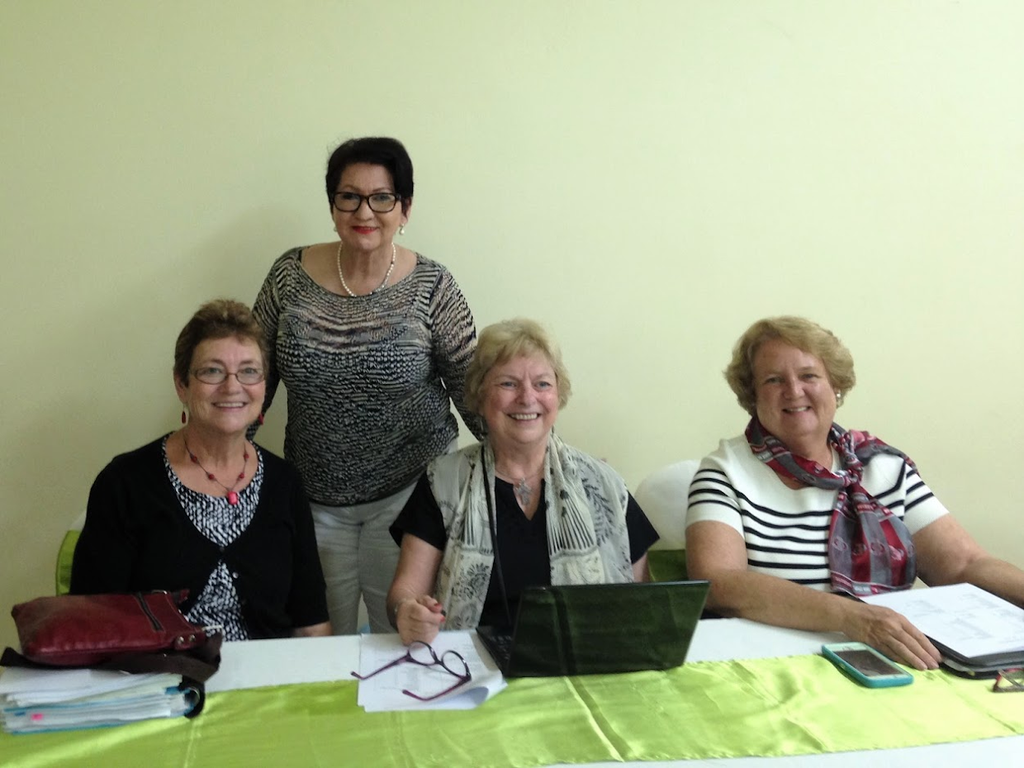
Working with Dr. Kathleen Stone and Dr. Lissa Barker, Angie helped develop an innovative curriculum combining general secondary education with specialized nursing preparation. Their vision included courses in pharmacology, microbiology, minor surgical procedures, and additional sciences, along with biblical principles intended to shape compassionate healthcare professionals.
The challenge was that Honduras did not yet have an approved technical high school program of this kind. Establishing one required more than opening a school; it meant working with the Honduran Ministry of Education to develop an entirely new educational pathway.
God opened an unexpected door through a partnership with FUNAZUCAR, a Honduran foundation. Its executive director, Elsa Osorto, helped arrange a meeting with Honduras’s Minister of Education, Dr. Marlon Escoto, on April 4, 2016.
To our surprise, the minister enthusiastically supported the proposal and authorized development of a pilot nursing high school program, with classes scheduled to begin in February 2017. Suddenly, a dream that had taken years to develop had only ten months to become a reality.
The months that followed required extraordinary cooperation. Honduran nurse Rosa Margarita Rodríguez worked closely with Ministry of Education specialists to develop and adapt the curriculum to national requirements. Angie and her colleagues continued contributing their professional expertise, while Aleyda Spetnagel helped prepare for the school’s opening.
We also faced the practical challenges of finding classrooms, laboratories, equipment, instructors, and financial support. We remodeled our former home and Angie’s clinic in Choluteca to accommodate the new school. What had once been our residence gradually became a place where young Hondurans could prepare for careers of service.
On February 6, 2017, IETI welcomed its first sixteen students. Aleyda Spetnagel became the school’s first director, while Angie served as rector in an advisory capacity, helping guide the institution she had worked so faithfully to establish.
The school celebrated another milestone on December 3, 2019, when its first class graduated.
One of the most meaningful moments came during a school anniversary celebration when a student publicly thanked Angie, saying, “Because you were able to realize your life dream, I am now realizing my dream. Thank you.”
Those words expressed something that statistics and institutional accomplishments could never fully capture. Angie’s dream was never simply to establish a nursing school. It was to open doors for young people whose lives, families, and communities could be transformed through education and Christian service.
We remain grateful for the Honduran educators, government officials, ministry partners, and supporters whom God brought together to make IETI possible. What began as one person’s vision became a shared commitment to preparing future generations of healthcare professionals.
2020–2023 | A Broader Mission: Serving the Americas
For four decades, Honduras had been our home. It was where our children grew up, where we developed lifelong friendships, and where God allowed us to participate in ministries that transformed our understanding of Christian service and community development.
By early 2020, Angie and I were approaching a significant transition. As we neared our 65th birthdays, we sensed it was time to step back from direct operational responsibilities and entrust the ministries in Choluteca more fully to Honduran leadership.
We had anticipated making that transition gradually, with plans to leave Honduras in June 2020.
Then the COVID-19 pandemic changed everything.
On March 15, 2020, we found ourselves packing four suitcases and preparing to leave the country within twenty-four hours. There was little time for goodbyes, no opportunity for a formal farewell, and no way to anticipate when we might return.
Walking through a nearly empty airport, we realized that an important chapter of our lives was ending far differently than we had imagined.
Yet even in the sadness of that departure, we experienced a profound sense of gratitude. God had raised up capable Honduran leaders who were prepared to continue the ministries we had helped establish.
David Ortiz, Osman Echeverría, Dilcia Osorto, Tania Moncada, Pati Rodríguez, and many others were already carrying significant responsibilities in vocational education, nursing education, youth development, and church ministry.
Our departure reinforced a lesson we had gradually learned through years of community development: one of the most important measures of effective ministry is whether the work can continue and flourish without our direct involvement.
In that sense, we were witnessing something we had long hoped to see. The ministries belonged to neither us nor any individual missionary. They were part of God’s work through the Honduran church and community.
A Broader Assignment
In June 2020, we officially joined World Gospel Mission’s Americas Regional Team, beginning a three-year assignment based in Ohio.
Our responsibilities expanded beyond Honduras as we worked alongside missionaries and national leaders serving in different parts of North, Central, and South America.
Drawing upon our experiences in Honduras, we provided encouragement, consultation, and mentoring in community development, educational ministries, leadership development, and ministry partnerships.
My doctoral studies at The Ohio State University also opened opportunities to help WGM strengthen its approach to ministry outcomes evaluation. This work focused on helping ministry leaders understand the changes taking place in their communities, learn from experience, and use evidence to improve their effectiveness.
Angie continued supporting nursing education, healthcare partnerships, and student sponsorship initiatives, maintaining relationships with Honduran leaders and educational institutions.
Technology also made it possible to remain involved despite the geographical distance. Through online meetings, teaching, and mentoring, we continued collaborating with ministry leaders in Choluteca while developing relationships across the Americas.
The transition was not always easy. After so many years of face-to-face ministry, we had to learn new ways of serving and encouraging others.
Yet we discovered that God’s calling was not limited to a particular country, assignment, or season of life.
Looking back, those three years became an important bridge between our decades of ministry in Honduras and our transition to emeritus status in 2023.
We had left Honduras much sooner than expected, but we had not left behind the relationships, commitments, or calling that had shaped our lives. Instead, God was opening new opportunities to participate in His mission while watching Honduran leaders carry forward the work entrusted to them.
2023–Present | Continuing the Journey: Mission Beyond Retirement
After 43 years of missionary service with World Gospel Mission, Angie and I transitioned to emeritus status in 2023. Although we had retired from our formal assignments, we never considered retirement to mean withdrawing from Christian service.
We often express it this way: “We may retire from an assignment, but we never retire from belonging to Christ or participating in His mission.”
Our years in Honduras taught us that meaningful ministry is built on relationships, shared responsibility, and developing local leadership. Those convictions continue to shape our involvement today.
Continuing to Strengthen Ministries in Honduras
I continue serving as an advisor for monitoring and evaluation, helping World Gospel Mission and its ministry partners assess project outcomes, measure progress, and better understand the long-term transformational impact of their work. This includes supporting educational and community development projects in Choluteca and advising ministries in other parts of the world.
Angie remains actively involved in educational sponsorships for Honduran children and young people. The scholarship program has supported more than 240 students, helping families provide educational opportunities that might otherwise have been beyond their reach. She has been working alongside Rhonda Holton to transition leadership responsibilities while continuing to develop relationships with sponsors and encourage students.
Angie also maintains close relationships with the staff of the IETI Nursing School, the institution she helped establish. Her continuing involvement includes encouragement, educational consultation, and health education initiatives. During visits to Honduras, she has helped train 4-H/4-S leaders in blood pressure and blood glucose screening and coordinate preventive health activities, including fluoride treatments for children.
We continue traveling to Choluteca several times each year when circumstances permit, usually staying for multiple weeks. These visits offer opportunities to reconnect with longtime friends, evaluate ministry projects, support nursing education, encourage Honduran leaders, and participate in the life of Shalom Church.
Technology has also opened new doors for ministry. I continue teaching a Bible study class remotely with members of Shalom Church, allowing us to study Scripture together even while living thousands of miles apart.
Sharing the Stories and Lessons of Honduras
Another important part of this season has been writing and sharing what God has taught us through our experiences.
Together, we authored and published I Just Want to Be Somebody: Stories of Hope, Faith, and Transformation. Through stories of Honduran young people, churches, and communities, the book encourages readers to recognize the dignity and potential of every person. Proceeds from the book support educational ministries in southern Honduras.
I am also continuing to write, including a second book, Becoming Somebody, and a devotional project, Somebody’s Morning. These projects explore themes of faith, community transformation, personal growth, and God’s work through ordinary people.
Speaking engagements at churches, bookstores, and Bible study groups offer additional opportunities to share what God continues to do through Honduran leaders and communities. Our desire is not simply to recount the past, but to encourage others to participate in God’s mission wherever He has placed them.
Serving in Our Home Community
Living in the Mount Vernon and Fredericktown area of Ohio has also created opportunities for local ministry. Through Cornerstone Community Church, we participate in small groups, Bible studies, and adult Christian education. We also support broader denominational mission initiatives.
These opportunities remind us that Christian service is not defined by geography. The same calling that took us to Honduras continues to shape our lives in Ohio.
The Journey Continues
Looking back over more than four decades of missionary service, we recognize that the most enduring results are not buildings constructed, programs established, or projects completed. They are found in people whose lives have been changed, relationships that continue to grow, and communities increasingly equipped to shape their own futures.
We are especially encouraged to see Honduran leaders continuing and expanding ministries that began years ago. Their commitment, creativity, and faithfulness remind us that the work was never ours to possess.
We remain grateful for the many people God has brought into our lives and for the privilege of continuing to participate in His mission.
Our assignments have changed, but the journey of faith and service continues.
Partnerships in God’s Mission
Looking back over our years in Honduras, one truth stands out: we could never have accomplished nearly as much without the faithful partnership of countless churches, individuals, universities, healthcare professionals, and volunteers who joined us in God’s mission.
Some partners prayed faithfully for decades. Others gave generously, traveled to Honduras, shared their professional expertise, or worked alongside Honduran believers on construction, education, and healthcare projects. Each brought something valuable, and together their contributions made possible far more than any of us could have accomplished alone.
We are especially grateful for the churches throughout the United States that stood with us year after year. Their partnership was never simply about providing financial resources. It was about shared faith, enduring relationships, mutual encouragement, and a common desire to participate in what God was doing through His people in Honduras.
We also recognize that these partnerships were most meaningful when they strengthened the work of Honduran Christians and community leaders. Their knowledge, commitment, encouragement, and daily service provided the foundation upon which these collaborative efforts could grow.
The story of our ministry is therefore not primarily the story of Larry and Angie Overholt. It is a testimony to God’s faithfulness expressed through the lives and contributions of many people, each responding to opportunities to serve.
Supporting Churches and Volunteer Teams
Throughout our missionary service, churches across the United States became faithful partners in the ministry in Honduras. Many supported us for decades through prayer, financial giving, encouragement, and friendship. Their commitment sustained us through changing assignments, unexpected challenges, and new opportunities for service.
Some congregations extended their involvement by sending volunteer teams to Honduras. Working alongside Honduran Christians and community members, these teams contributed their time, skills, and resources to construction and improvement projects. Their participation helped make possible facilities and other improvements that supported local ministries.
Yet the significance of these visits extended beyond the physical work accomplished. Relationships developed across cultural and national boundaries, and participants gained a deeper understanding of the lives, challenges, and faith of the Honduran people they came to serve alongside.
We remain grateful for the many congregations and individuals whose generosity and willingness to serve helped strengthen the ministry. Although there are far too many to recognize individually, their contributions remain an important part of the story of God’s faithfulness in Honduras.
Healthcare and Educational Partnerships
God also brought healthcare professionals, educators, and university students into the ministry in Choluteca. Their willingness to share their knowledge and professional skills created opportunities to address practical needs while strengthening relationships with Honduran communities.
One particularly meaningful partnership has involved an eye doctor who regularly travels to Honduras to provide eye examinations and fit people with eyeglasses. His continuing commitment demonstrates how one person’s professional abilities can become a means of serving others and building lasting relationships.
Cedarville University has also been a valued partner through annual visits by pharmacy students. These teams provide instruction at the nursing school in Choluteca and offer fluoride treatments to students. Their involvement combines practical healthcare services with educational opportunities for both Honduran students and visiting university participants.
We are grateful for these partnerships and the many others that have contributed to the ministry. Their significance extends beyond individual visits or services. They demonstrate how people with different gifts can work together, supporting local institutions and helping strengthen the communities they serve.
World Gospel Mission and Honduran Ministry Partners
Throughout our 43 years of missionary service, World Gospel Mission provided an organizational and spiritual framework for our work. Through WGM, we were connected with fellow missionaries, supporting churches, ministry partners, and opportunities to serve in Honduras and beyond. We remain grateful for the relationships, encouragement, and support that made these years of service possible.
Equally important were the Honduran churches, pastors, ministry leaders, teachers, healthcare workers, and community members we served alongside. They brought an understanding of their communities, a commitment to their neighbors, and a vision for the future that shaped the ministry’s direction.
In Choluteca, our collaboration with the local church became the foundation for new congregations, community health education, and other initiatives. As ministries expanded, Honduran leaders assumed responsibility for much of the daily work, developing relationships and responding to the needs of families in their communities.
These experiences taught us that Christian mission is not simply about what missionaries bring to a community. It is about recognizing what God is already doing among His people and joining them in that work.
We are grateful for the privilege of serving alongside so many faithful people. Their contributions, leadership, and friendship remain among the greatest blessings of our missionary journey.
The Story Continues | God’s Faithfulness Through the Years.
Looking back over more than four decades of missionary service, we are reminded that this story has never really been about us. It is about God’s faithfulness and the extraordinary ways He works through ordinary people who are willing to follow Him.
We arrived in Honduras with limited experience and little understanding of where the journey would lead. Along the way, God brought people into our lives who became our teachers, coworkers, friends, and extended family. Together, we experienced seasons of uncertainty, devastating loss, rebuilding, and renewed hope.
The rebuilding that followed Hurricane Mitch taught us that restoring a community takes more than building houses, churches, or schools. Like Nehemiah and the people rebuilding Jerusalem, we discovered the importance of shared vision, prayer, perseverance, and everyone contributing according to their abilities. Lasting transformation grows as relationships are strengthened, local leadership develops, and communities recognize and use the resources God has already placed among them.
Today, we are especially encouraged to see Honduran leaders continuing and expanding ministries that began many years ago. Their faithfulness reminds us that God’s work never depends on any one person, missionary, or organization.
Our prayer is that these stories will encourage others to recognize God’s presence in their own circumstances and respond to the opportunities He places before them.
Assignments may change, places may change, and the people serving may change, but God’s faithfulness remains. And His story continues.